Biomass Pellets & Briquettes
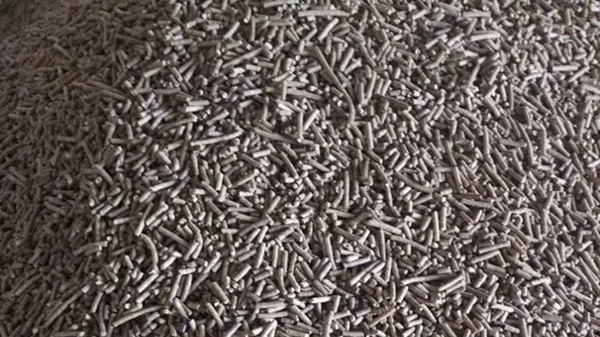
Pellets are the biofuels made from compressed biomass or organic matter like the food waste, agriculture residue, virgin lumber, industrial waste/co-products, and energy crops. However, the major source is from the wood products, so the energy output is high with minimal ash.
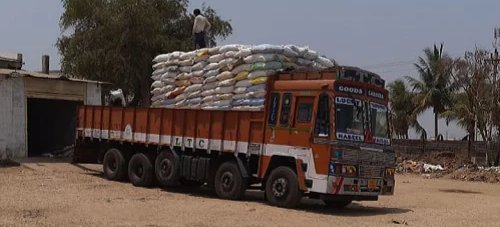
Pellets for their small size and regular geometry enable automatic feeding with fine calibration. Pellets can be fed to the burner by pneumatic conveying or auger feeding. Because of its high density it can be transported for a longer distance and enables compact storage.
The investment cost of overall setup of the pellet burning and installing pellet burner is relatively low. In terms of environment-friendly, cost efficiency, and running cost pellet is the best option.
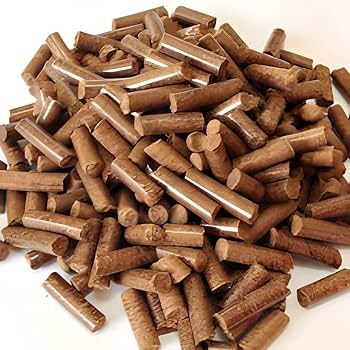
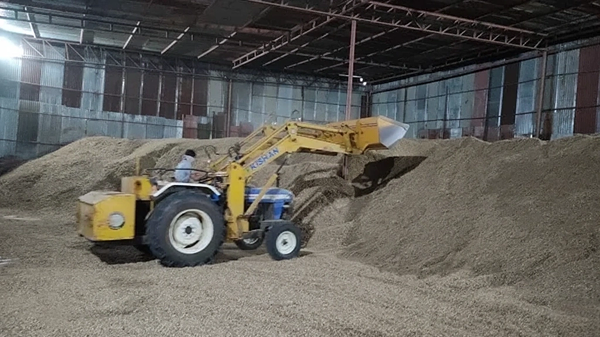
Pellet production also supports local economies by creating jobs in manufacturing, transportation, and maintenance within rural and semi-urban regions(see the generated image above). The use of agricultural residues and waste materials for pellet production not only reduces landfill waste but also allows farmers and industries to monetize their by-products, contributing to a circular economy(see the generated image above).
Furthermore, pellets are highly adaptable and can be utilized in a variety of heating systems, from small-scale domestic boilers to large industrial power plants(see the generated image above). Their standardized composition and predictable performance make them ideal for integration into automated and high-efficiency energy systems, further solidifying their role as a key player in the transition towards sustainable energy solutions(see the generated image above).
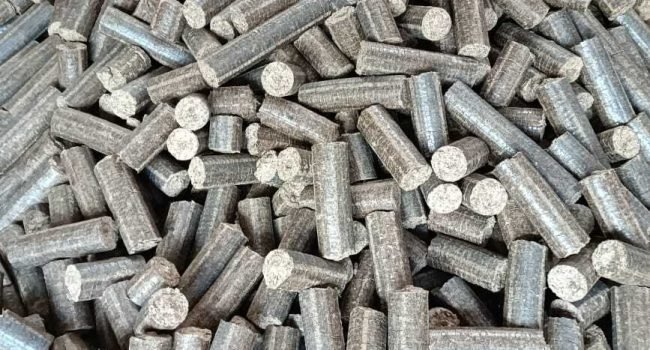
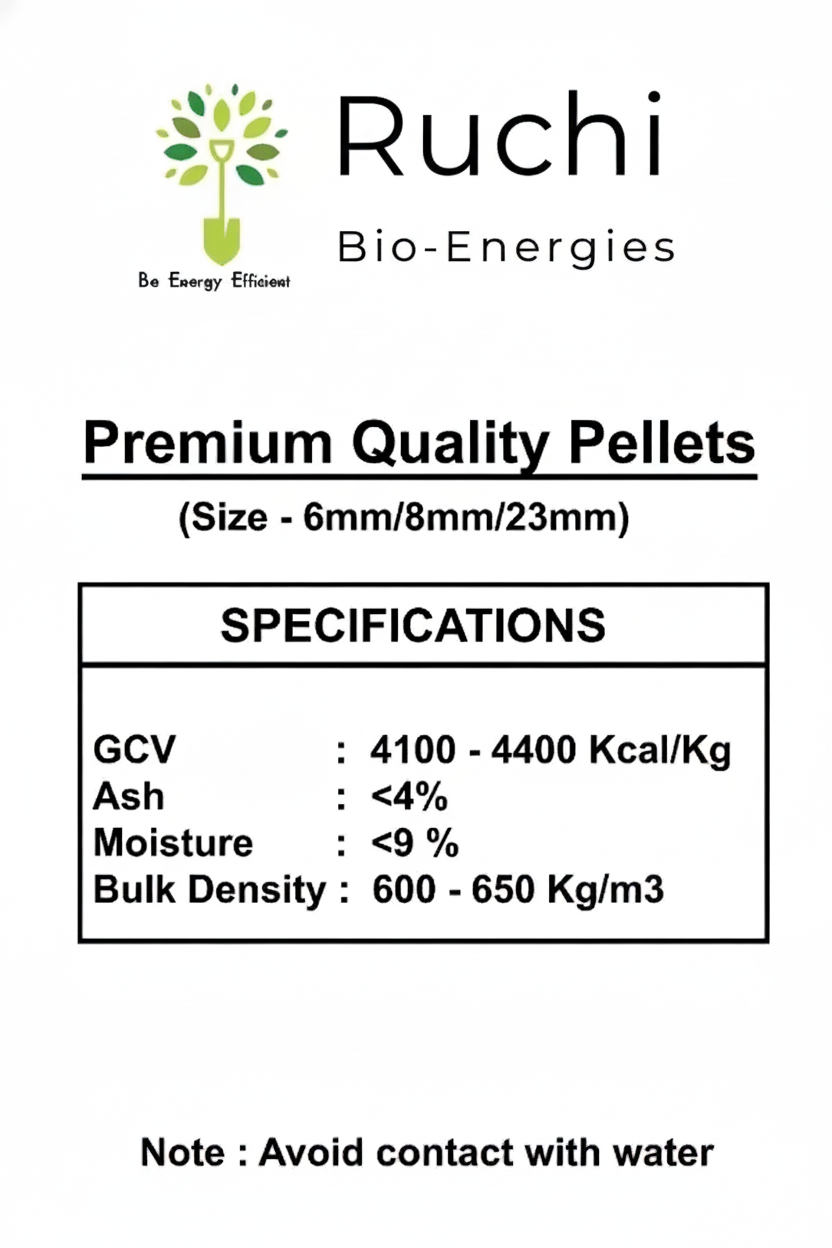
Specifications of our product
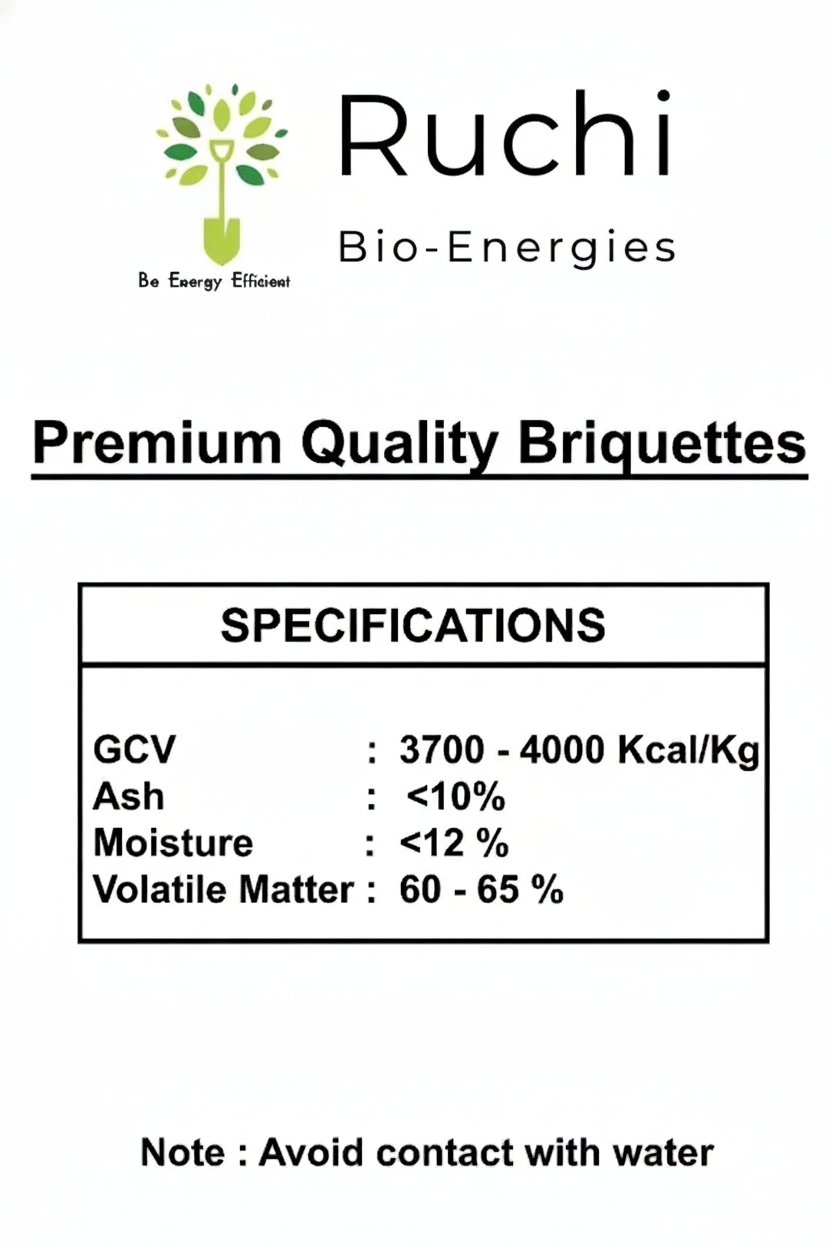
When considering long distance transport, the density, shape and size of the briquette makes it the best biomass fuel. The usage of power and water requirement in the briquetting process is much lesser. The overall power consumption for a typical 1500 kg/h in briquetting is 100hp. Water is required only for cooling purposes and for general cleaning and maintenance purposes.
Biomass is biological material derived from living, or recently living organisms and in ecology, is the mass of living biological organisms in a given area or ecosystem at a given time. It most refers to plants or plant based materials which are specifically called lignocellulosic biomass. As an energy source biomass can either be used directly via combustion to produce heat or indirectly after converting into various forms of biofuel.
Biomass Pellets & Briquettes are a biofuel substitute to coal and charcoal. They are mostly used in the developing world, where cooking fuels are not easily available. There has been a move to the use of biomass pellets & briquettes in the developed world, where they are used to heat industrial boilers in order to produce electricity from steam. They are covered with coal in order to create the heat supplied to the boiler.
Briquetting and pelleting is a way to convert loose biomass residues, such as sawdust. Straw or rice husk, into high density solid blocks that can be used as fuel. Biomass pellets & briquettes replace fossil fuels or wood for cooking and industrial processes. They are cleaner and easier to handle and cut greenhouse gas emissions.
Properties of biomass pellets and briquettes.
- Biomass has high calorific value ranging between 3500 to 5000 Kcal/kg depending on the raw material used.
- It has a low ash content of 3% to 12% as compared to 20 to 40 percent in coal.
- It is a very good non polluting fuel, as it does not emit any sulphur or phosphorus fumes and fly ash, eliminating the need for expensive pollution control equipment.
- It is a highly efficient fuel and easy in handling and storage due to its size and it can be easily packed in bags and thereby reducing labour costs in handling, storage and breaking.
- It is clean to handle and keeps the surrounding environment clean.
- Its availability is better as it is usually produced in combustion centers reducing cost of storage and space.
- It’s cheaper in cost and economical in production and consumption.
- It does not contain any foreign binding ingredients.
- It burns evenly and steadily giving a longer fire for a longer heating period.
PET COKE Vs PELLETS
PET COKE FUEL NOT PREFERRED
Pet coke, a by-product of the oil refining process is gradually being discarded as an alternate fuel in furnaces especially on environmental concerns (very high Sulphur content and emissions.)
DIFFICULT RECOVERY OF ENERGY
Though stated to have a high calorific value of about 7500 Kal/kg, Industrial units are able to recover part value and at Dmes requiring dual feeding to recover 5-6 tons of steam per ton of pet coke.
MAINTENANCE OF BOILER SYSTEM EXPENSIVE
Sulphur deposits removal is difficult, expensive, Dme consuming and hazardous.
AVAILABILITY OF PET COKE AND RESTRICTION ON USE
Availability is also becoming an issue as well as increasing price.
CLEAN BIOMASS PELLETS
Ruchi Bio-Energies has the normal pellets which give clean energy equivalent to pet coke without the attendant problems.
CAN BE USED IN EXISTING SYSTEM
As the pellets are virtually moisture free one gets high productivity when used without harmful emissions in the same system as pet coke use with minor or no modification.
TYPES OF RAW MATERIAL USED TO MAKE BIOMASS PELLETS & BRIQUETTES
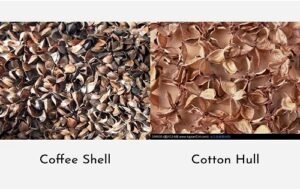
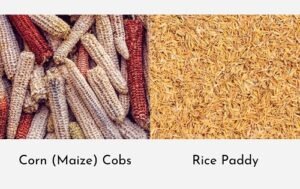
- SAW DUST
- GROUNDNUT SHELL
- COFFEE HUSK
- RICE HUSK
- COTTON HUSK
- COCONUT CHARCOAL POWDER
- MULBERRY STICKS
- BAGASSE
- OTHERS
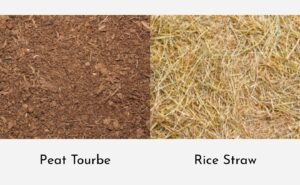
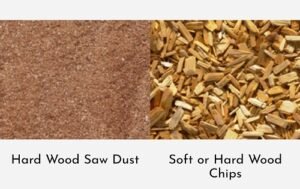
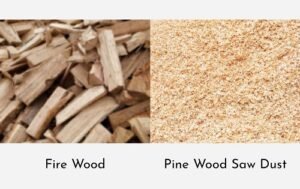
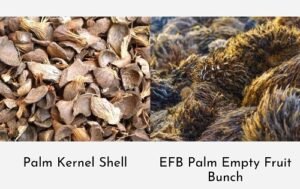
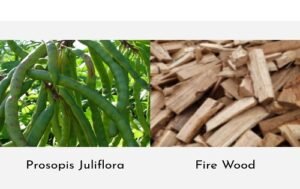
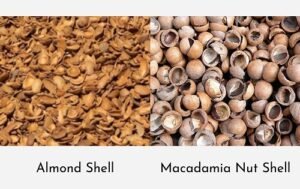
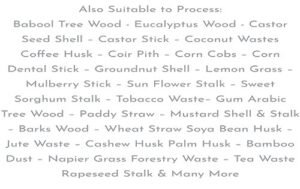
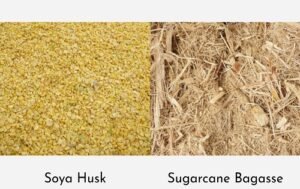
Raw material used to make our product
Process Description
The biomass pelletization process consists of multiple steps including raw material pre-treatment, pelletization and post-treatment. The first step in the pelletization process is the preparation of feedstock which includes selecting a feedstock suitable for this process, its filtration, storage and protection. Raw materials used are sawdust, wood shavings, wood wastes, agricultural residues like straw, switchgrass etc. Filtration is done to remove unwanted materials like stone, metal, etc. The feedstock should be stored in such a manner that it is away from impurities and moisture. In cases where there are different types of feedstock, a blending process is used to achieve consistency.
The moisture content in biomass can be considerably high and are usually up to 50% – 60% which should be reduced to 10 to 15%. Rotary drum dryer is the most common equipment used for this purpose. Superheated steam dryers, flash dryers, spouted bed dryers and belt dryers can also be used. Drying increases the efficiency of biomass and it produces almost no smoke on combustion. It should be noted that the feedstock should not be over dried, as a small amount of moisture helps in binding the biomass particles. The drying process is the most energy intensive process and accounts for about 70% of the total energy used in the pelletization process.
Before feeding biomass to pellet mills, the biomass should be reduced to small particles of the order of not more than 3mm. If the pellet size is too large or too small, it affects the quality of the pellet and in turn increases the energy consumption. Therefore the particles should have proper size and should be consistent. Size reduction is done by grinding using a hammer mill equipped with a screen of size 3.2 to 6.4 mm. If the feedstock is quite large, it goes through a chipper before grinding.
The next and the most important step is pelletization where biomass is compressed against a heated metal plate (known as die) using a roller. The die consists of holes of fixed diameter through which the biomass passes under high pressure. Due to the high pressure, frictional forces increase, leading to a considerable rise in temperature. High temperature causes the lignin and resins present in biomass to soften which acts as a binding agent between the biomass fibers. This way the biomass particles fuse to form pellets.
The rate of production and electrical energy used in the pelletization of biomass are strongly correlated to the raw material type and processing conditions such as moisture content and feed size. The average energy required to pelletize biomass is roughly between 16 kWh/t and 49kWh/t. During pelletization, a large fraction of the process energy is used to make the biomass flow into the inlets of the press channels.
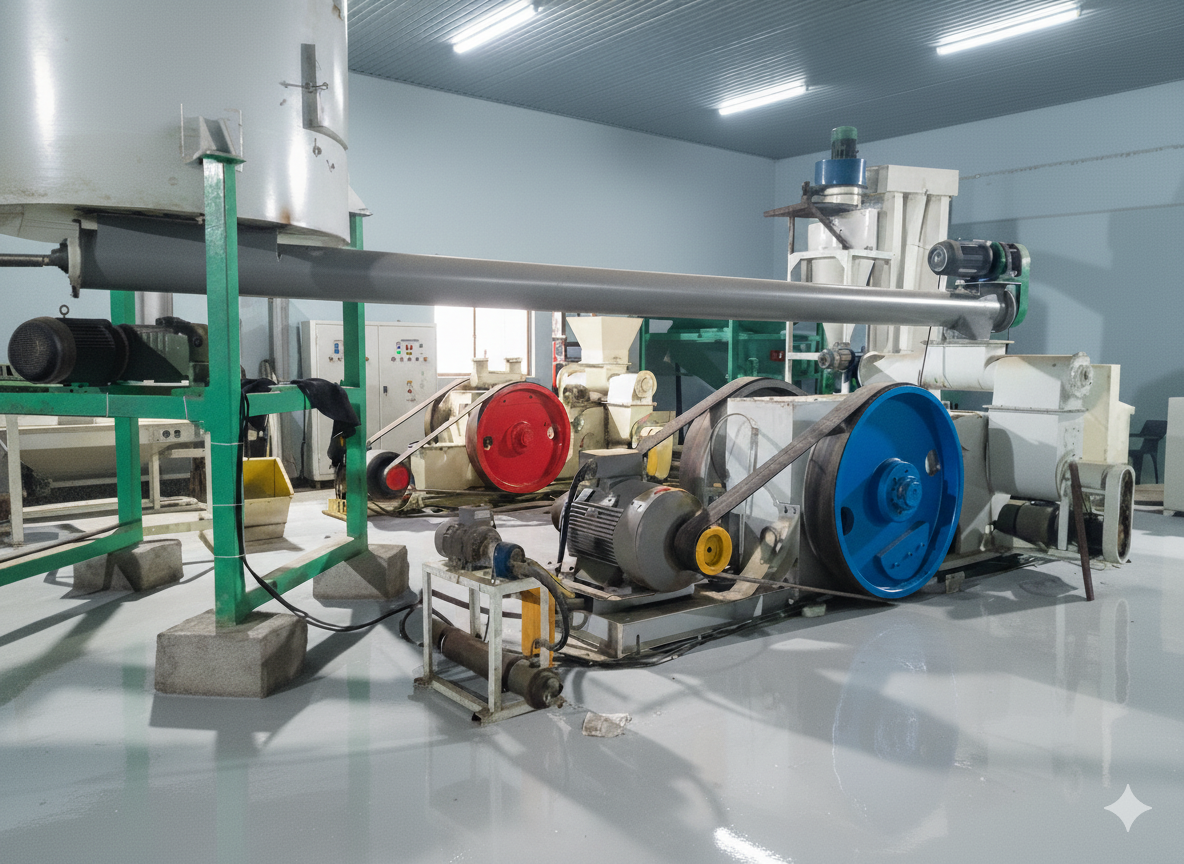
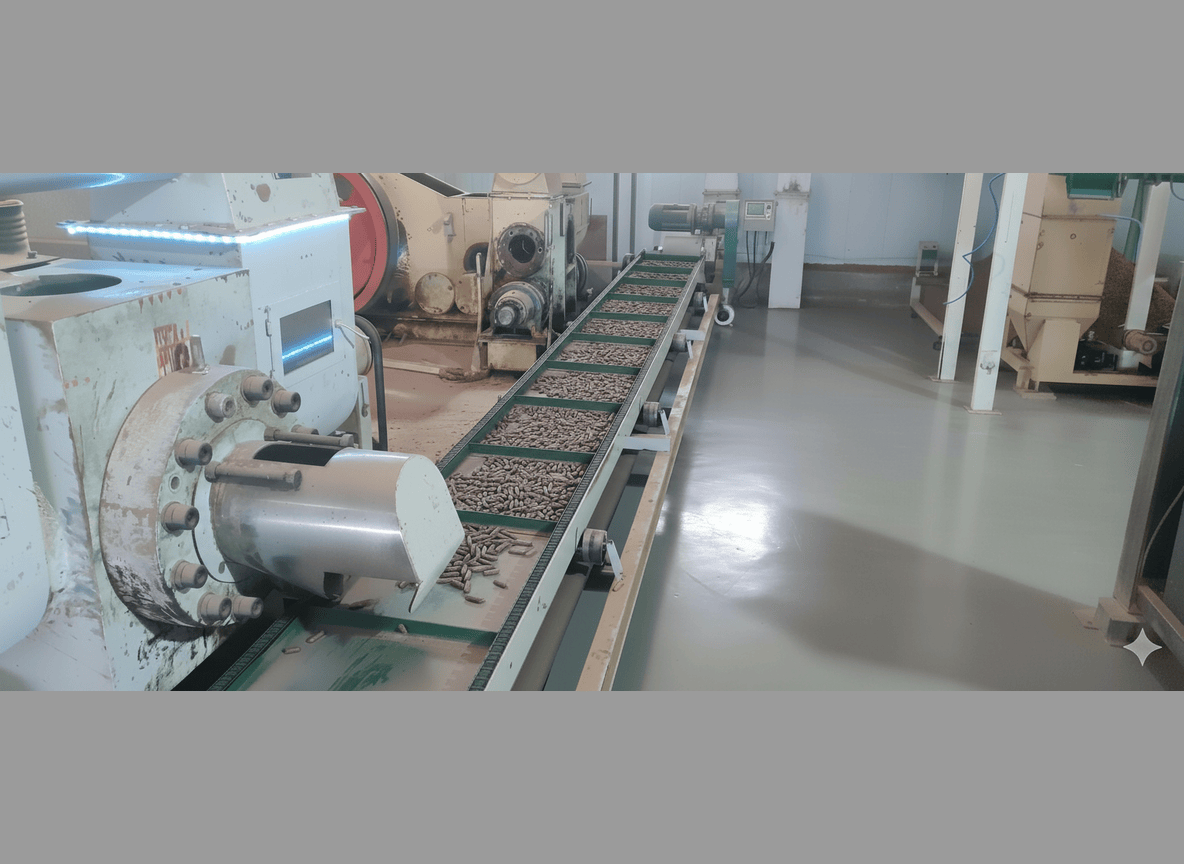
Binders or lubricants may be added in some cases to produce higher quality pellets. Binders increase the pellet density and durability. Wood contains natural resins which act as a binder. Similarly, sawdust contains lignin which holds the pellet together. However, agricultural residues do not contain much resins or lignin, and so a stabilizing agent needs to be added in this case. Distillers dry grains or potato starch are some commonly used binders. The use of natural additives depends on biomass composition and the mass proportion between cellulose, hemicelluloses, lignin and inorganics.
Due to the friction generated in the die, excess heat is developed. Thus, the pellets are very soft and hot (about 70 to 90oC). It needs to be cooled and dried before its storage or packaging. The pellets may then be passed through a vibrating screen to remove fine materials. This ensures that the fuel source is clean and dust free.
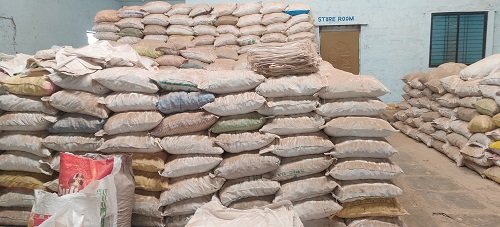
The pellets are packed into bags using an overhead hopper and a conveyor belt. Pellets are stored in elevated storage bins or ground level silos. The packaging should be such that the pellets are protected from moisture and pollutants. Commercial pellet mills and other pelletizing equipment are widely available across the globe.

Email : info@ruchibioenergies.com
Factory/Office Address
878/AA, Near Lorry Union Stand, leeja Road, Gadwal-509125. Telangana
Branch Office Address
8th Floor, Office No 801 to 804, Vantage-9, Mumbai-Banglore Highway, Baner, Pune - 411045